
Developing aquaculture based on resources of Dau Tieng Lake (Vietnamese)

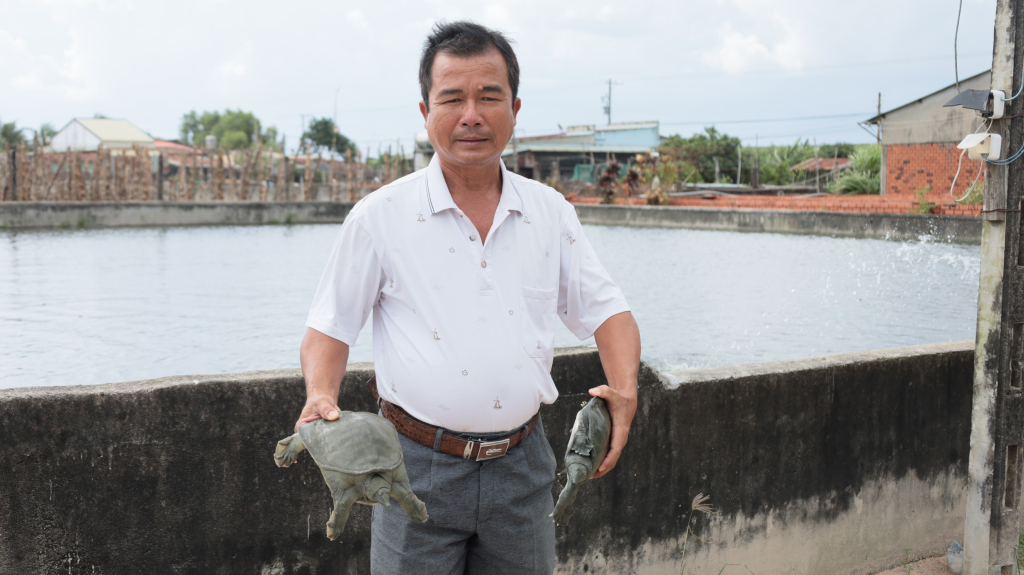
Mr. Pham Van Toai's turtle farming model is considered one of the exemplary models in the locality
Developing the aquaculture industry
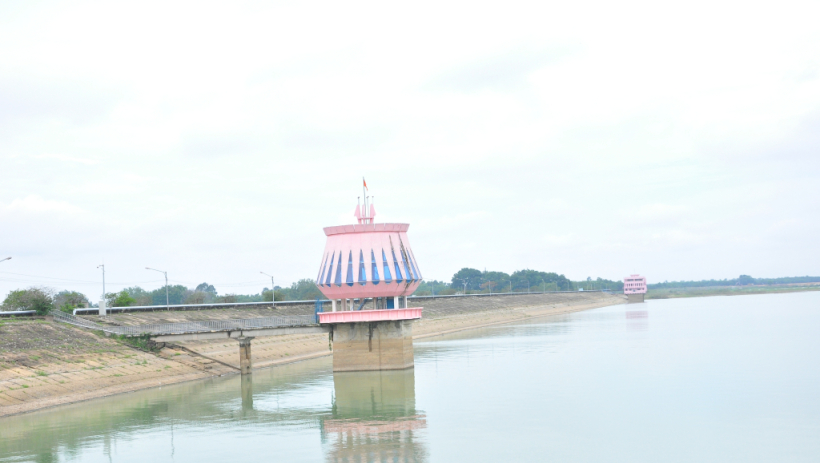
Dau Tieng Lake is the largest artificial irrigation project in Southeast Asia, with a surface area of over 27,000 hectares and a capacity of approximately 1.58 billion cubic meters of water. It not only provides irrigation water for agricultural production in Tay Ninh and neighboring provinces but also creates a vast freshwater ecosystem favorable for the development of aquaculture and fisheries.
In the former Duong Minh Chau district, thanks to the stable water supply from the lake and the main eastern canal system, many households have converted a portion of their land to aquaculture. Models for raising snakehead fish, tilapia, catfish, and other species have developed strongly, providing stable income for the people.
Some households have also developed specialized aquaculture models such as raising commercial turtles and catfish, adding economic value to the same water surface area.
In Hamlet B4, Loc Ninh Commune, the model of raising turtles and snakehead fish commercially by Mr. Pham Van Toai—an outstanding Vietnamese farmer of 2023—is considered one of the typical models of the locality.
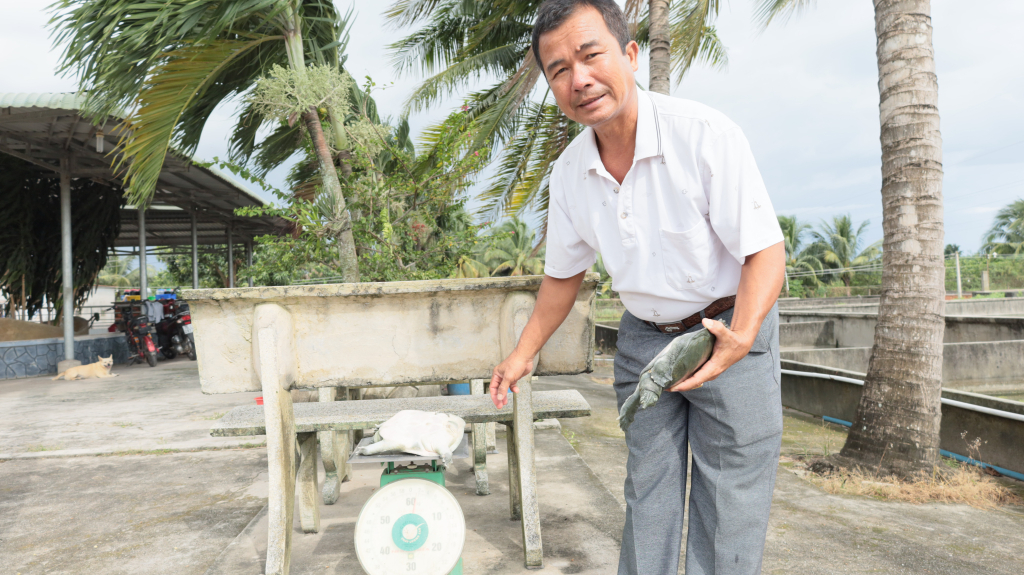
Mr. Pham Van Toai has successfully utilized the water resources from Dau Tieng Lake to raise aquatic products
His farm has about 50 ponds with over 100,000 softshell turtles and is quite well-invested in, from the pond system to internal roads. According to Mr. Toai, softshell turtles have a relatively long breeding period, about 14-15 months before harvesting; their meat is delicious, nutritious, and the selling price is stable, so breeders are still guaranteed a profit.
In order to maximize the time available for turtle harvesting, Mr. Toai also made an investment in raising snakehead fish. Snakehead fish are usually ready for sale after about 9 months of raising. If raised longer, they can reach a weight of 4-5 kg per fish.
By combining two farming models – raising soft-shelled turtles and snakehead fish – on an area of over 3 hectares, he supplies hundreds of tons of commercial fish and soft-shelled turtles to the market each year, generating billions of dong in profit.
"Farming now relies not only on human labor but also on techniques and knowing how to utilize the local natural conditions. The clean and stable water source of Dau Tieng Lake is very favorable for aquaculture," Mr. Toai shared.
Besides Mr. Toai, in Hamlet B4 there is also a turtle farm covering more than 1,000m² owned by Mr. Pham Van Dang. The farm is divided into several separate areas for each stage of the turtle's life, such as breeding, egg incubation, and raising hatchlings.
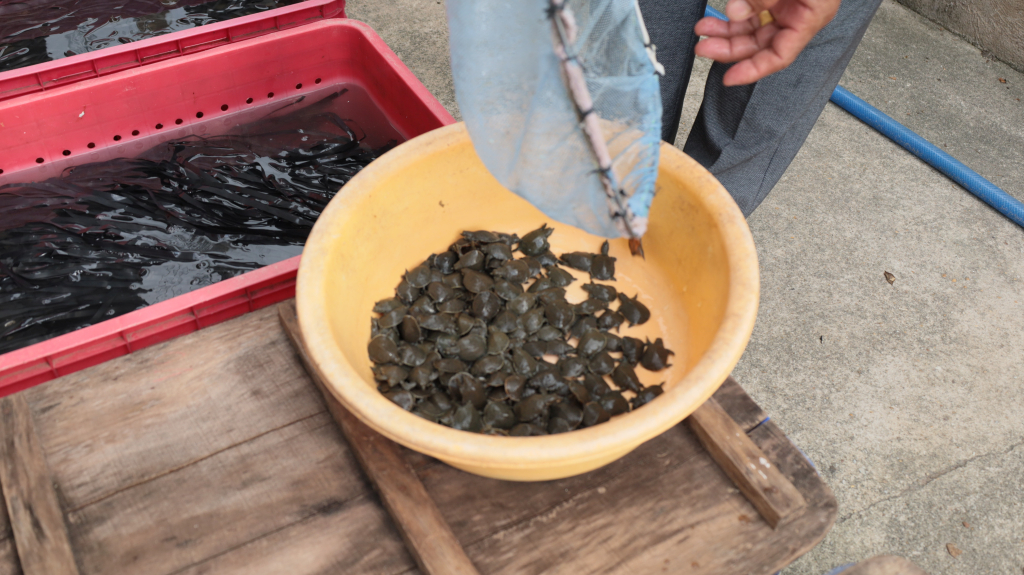
Turtle breed
According to Mr. Dang, turtle breeders must closely monitor weather conditions to promptly address any issues with the water environment.
"Turtles are susceptible to fungal infections when the weather changes. Therefore, I usually treat the breeding tanks with lime or salt to disinfect them. I only use medication when necessary, following the instructions of the fisheries officials," Mr. Dang said.
According to the local Department of Agriculture, the former Duong Minh Chau district currently has over 100 households engaged in aquaculture, covering a total area of approximately 370 hectares. Thanks to favorable water conditions, fish farming models are increasingly developing and providing a considerable income for the people.
Some households also participate in production linkages through cooperatives to apply common technical processes and stabilize product output. As a result, aquaculture in the lakeside area is gradually forming a concentrated production zone.
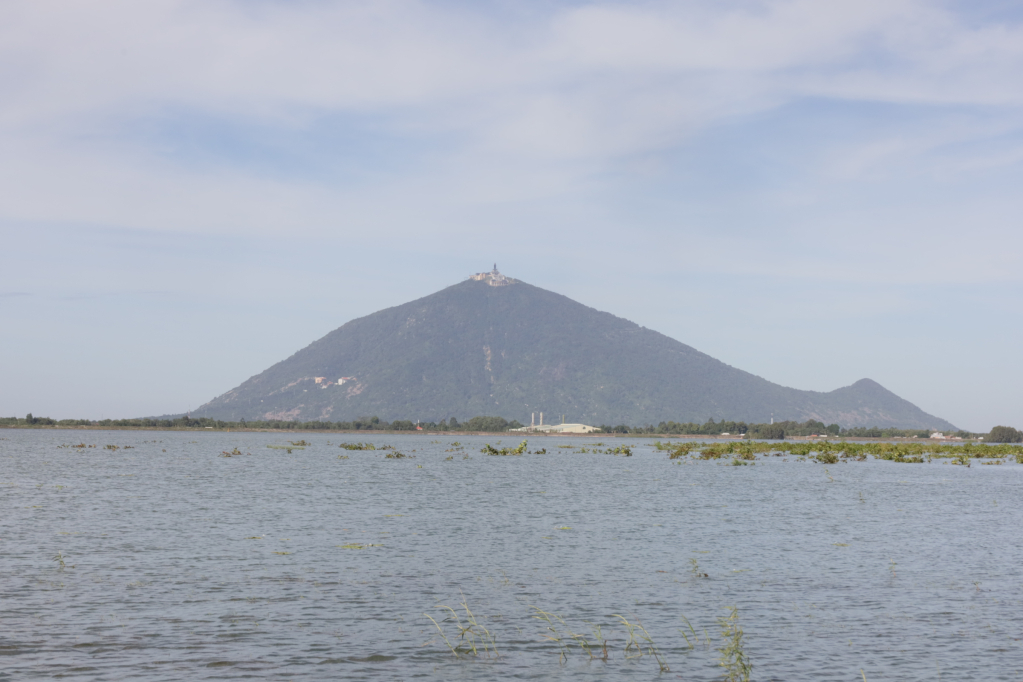
Dau Tieng Lake
Planning for aquaculture areas along the lake
Given the potential for aquaculture development from the water resources of Dau Tieng Lake, the local government is gradually planning and supporting people in developing production.
According to Nguyen Van Dung, Vice Chairman of the People's Committee of Loc Ninh commune, in implementing the Tay Ninh province's aquaculture development plan, the locality has allocated approximately 82 hectares of land for aquaculture.
Simultaneously, the commune invested in a drainage system to collect livestock wastewater and built filtration tanks to treat the environment, ensuring that the water meets standards before being introduced into the general irrigation system.
In addition, the People's Committee of the commune is implementing a policy to support production linkage chains according to Decision 23/2019/QD-UBND of the People's Committee of Tay Ninh Province, with a mechanism where the State provides 30% support and the people contribute 70%.
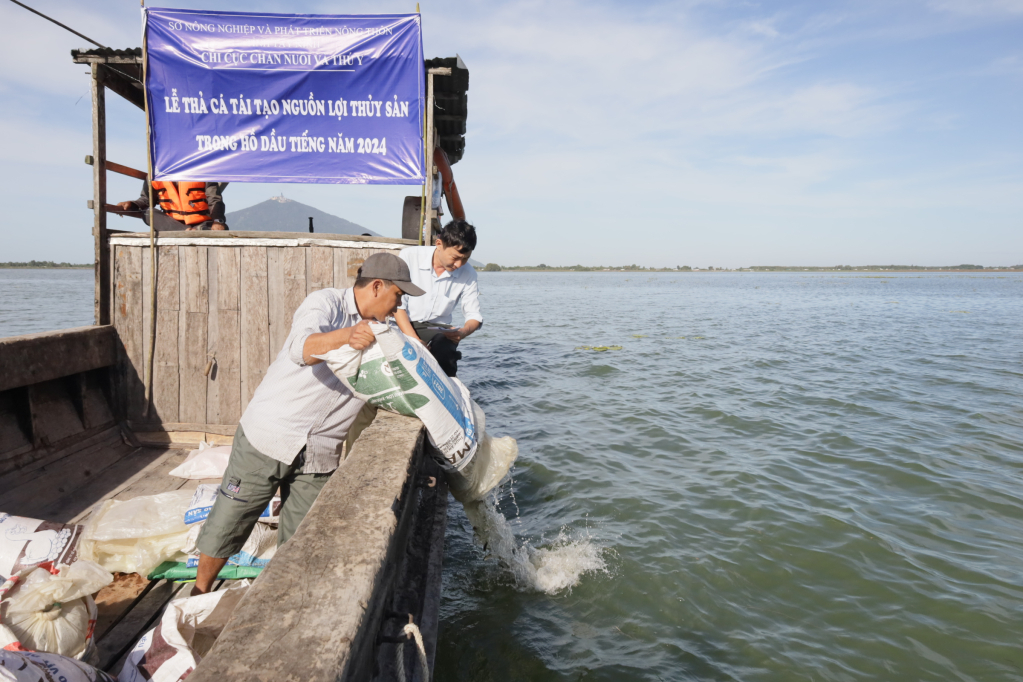
For many years, Tay Ninh province has continuously released millions of fish and shrimp fry into Dau Tieng Lake
After the policy was widely disseminated, many households boldly participated in production linkages. Among them, the Loc Ninh Commune Agricultural Service Cooperative and the Hiep Ninh Hamlet Snakehead Fish Farming Cooperative received a total of over 807 million VND in support to implement the project.
According to Nguyen Van Dung, Vice Chairman of the People's Committee of Loc Ninh commune, the "30-70" matching mechanism not only helps people have more resources to invest in production but also enhances the responsibility of households participating in the project.
Thanks to the development of aquaculture models, many local households now earn between 200 and over 250 million VND per year, significantly higher than their previous income from traditional agricultural production.
Besides developing aquaculture, the Department of Agriculture of Tay Ninh province also regularly implements activities to regenerate aquatic resources in Dau Tieng Lake, releasing tens of thousands of carp, tilapia, grass carp, and freshwater prawns into the lake each year./.

Ý kiến ()