Improving waste collection and transportation: Tightening management and enhancing community responsibility (Vietnamese)

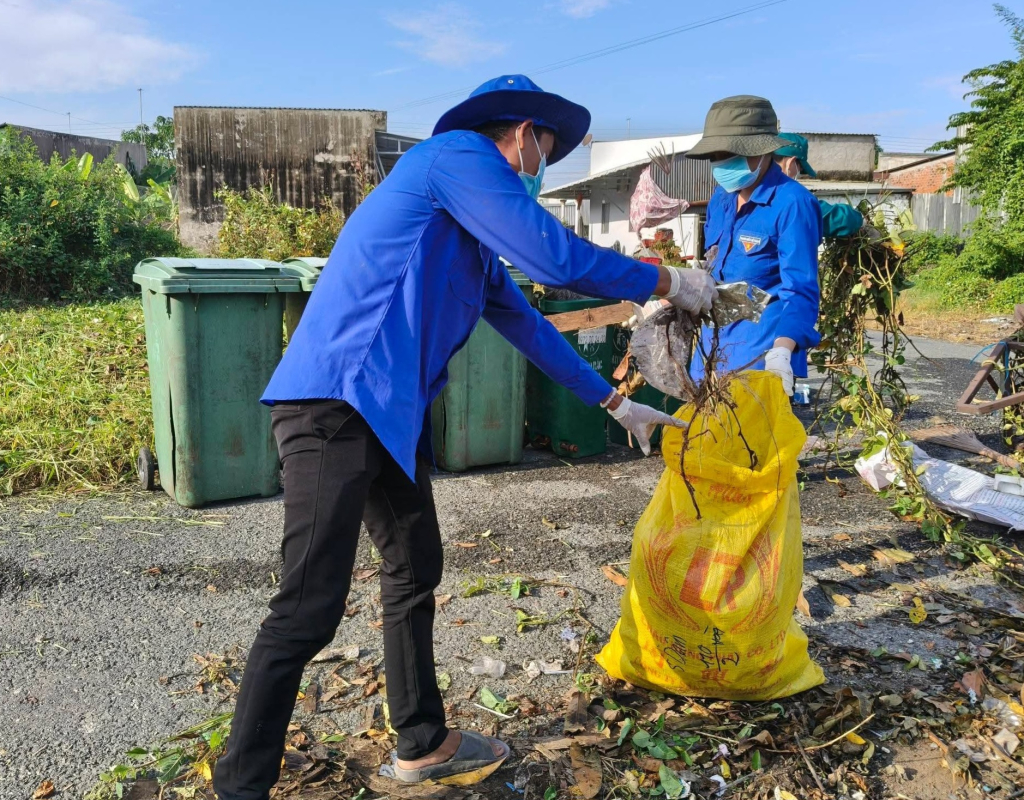
Bottlenecks in household waste management
Recently, along with socio-economic development, the collection, transportation, and treatment of household waste in the province have seen many positive changes. After implementing the two-level local government model, departments, agencies, and facilities have proactively reorganized the waste collection and transportation network according to zones, bringing waste to centralized treatment areas.
Specifically, Tam Sinh Nghia Investment and Development Joint Stock Company manages the first treatment zone at the Thanh Hoa Waste Treatment Plant—Long An, located in Tan Tay commune, receiving household waste from 37 communes in the province.
The second treatment zone is the Da Phuoc Solid Waste Treatment Complex (Ho Chi Minh City), managed by Vietnam Waste Treatment Company Limited, serving 11 communes.
The third zone is the Tay Ninh Waste Treatment Plant in Tan Phu commune, implemented by Tay Ninh Environmental Technology Joint Stock Company, receiving household waste from 18 communes.
The remaining zone is the Waste Treatment Complex in Thanh Duc commune, implemented by Hue Phuong Vietnam Green Environment Co., Ltd., serving 18 communes.
In addition, the Provincial People's Committee has assigned the People's Committees of Binh Hiep, Vinh Hung, and Vinh Thanh communes to directly organize the processing of solid household waste in their areas.
This assignment to the communes is intended to suit the actual conditions in border areas and remote regions, where transporting waste to centralized processing facilities is difficult.
Notably, to date, 100% of communes and wards in the province have signed contracts with functional units to collect and transport household waste. Environmental sanitation in residential areas, markets, tourist areas, and entertainment venues has gradually improved significantly. Many localities have established clean and beautiful streets and civilized residential areas, contributing to an improved quality of life for residents.
Despite these positive results, the province still needs to address numerous bottlenecks. Through monitoring and working with several localities, the implementation of tasks related to household waste management still shows many shortcomings.
One of the major limitations is the incomplete and lax system for establishing, managing, and collecting fees for waste collection services. Some localities have not fully reviewed all waste-generating entities, leading to omissions or incorrect/insufficient collection of fees. This not only results in budget losses but also directly affects the funding for maintaining waste collection and transportation operations.
Furthermore, the bidding process and selection of service providers in some areas are still disorganized and inconsistent. Monitoring of waste collection and transportation units is not carried out regularly, leading to infrequent collection and prolonged accumulation of waste in residential areas.
Ms. Le Thi Lan (a resident of My An commune) stated that in some localities, spontaneous waste collection points are still observed, with people littering indiscriminately, especially during holidays or periods of high waste volume. These images not only detract from the aesthetics but also pose a potential risk of environmental pollution and affect public health.
In addition, the infrastructure for waste collection in many areas still does not meet requirements. The placement of public trash cans along national highways, provincial roads, and densely populated areas is insufficient and inappropriate, causing inconvenience for residents in disposing of waste properly.
Another important reason is that the work of disseminating information and mobilizing people to participate in environmental protection has not been truly effective. In many places, this activity is still superficial, lacking depth, and has not assigned specific responsibilities to each household in sorting and disposing of waste at the source. The role of neighborhood and hamlet management boards and community self-governing groups has not been fully utilized.
Synchronized solutions, increased responsibility
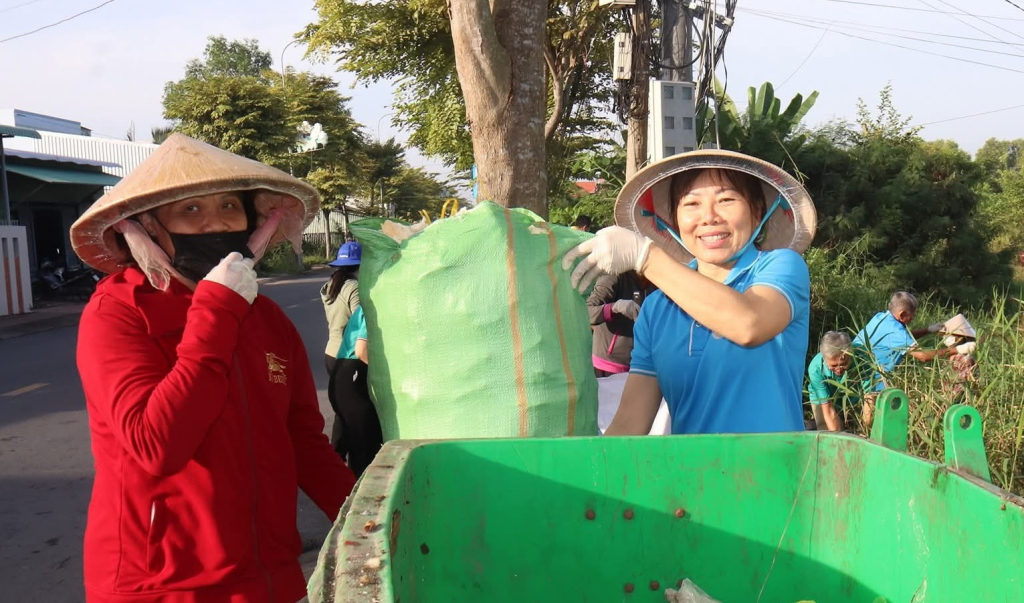
In response to the aforementioned shortcomings, the Department of Agriculture and Environment has proposed a series of specific solutions, requiring localities and relevant units to seriously implement them to comprehensively improve the management of household waste.
According to Mr. Tran Khac Phuc, Deputy Director of the Department of Agriculture and Environment, the primary focus is on tightening management, establishing a system of records, and collecting service fees. The People's Committees of communes and wards are required to urgently review and compile a complete list of entities generating solid household waste in their areas, ensuring that service fees are collected correctly, fully, publicly, and transparently according to regulations. At the same time, officials must be assigned to closely monitor and manage revenue sources to prevent loss or misuse.
Localities with budgetary difficulties must compile a report after collecting service fees to seek support for stable waste collection and transportation if funds remain insufficient.
Simultaneously, the monitoring of waste collection and transportation activities is also given special emphasis. Local authorities must assign staff to regularly monitor, promptly detect, and handle cases of contract violations, ensuring that waste does not accumulate in residential areas for more than two days. Service providers must strictly adhere to technical procedures, and transportation vehicles must meet requirements and be equipped with tracking devices.
Notably, the head of local government has a clearly defined responsibility. The Chairman of the People's Committee of the commune or ward must directly inspect, supervise, and be accountable to the Provincial People's Committee for the quality of environmental sanitation work in their area. This measure is considered an important solution to enhance proactiveness and responsibility in management.
“Besides management, building community awareness is also identified as a key task. Local authorities are required to launch a movement for all citizens to participate in environmental sanitation, maintaining regular weekend clean-up activities; and developing models of ‘Garbage-Free Streets’ and ‘Bright, Green, Clean, and Beautiful Residential Areas,'" Mr. Tran Khac Phuc emphasized.
The placement of public trash cans also needs to be reviewed and supplemented appropriately, ensuring convenience for people to use. At the same time, inspections and strict handling of violations related to littering should be strengthened, and the results should be publicly disclosed to enhance deterrence and compliance.
In particular, the Department of Agriculture and Environment emphasized the role of neighborhood and hamlet management boards and self-governing groups in disseminating information and mobilizing people. Maintaining environmental hygiene should be included as a criterion for evaluating the performance of these organizations, thereby creating a real transformation from the grassroots level.
Along with that, the Vietnam Fatherland Front and other mass organizations are requested to strengthen propaganda and mobilization of members, union members, and the people to participate in sorting, collecting, and processing waste and building self-governing models for environmental protection associated with the movement to build new rural areas and civilized urban areas.
The rectification of household waste collection, transportation, and processing is not only an immediate requirement but also a long-term task, linked to the sustainable development goals of the province. When the government takes decisive action, management mechanisms are tightened, and people's awareness is raised, the waste problem will be gradually solved, contributing to building a clean and civilized living environment for the community.
According to projections, the total amount of solid household waste generated in 96 communes and wards in 2026 is estimated at nearly 604,000 tons. To ensure that all this waste is collected, transported, and processed in accordance with regulations, the province has budgeted a total of over 266 billion VND, using funds from the environmental management budget and other legal funding sources.
Of the total budget mentioned above, the Department of Agriculture and Environment is assigned to lead the implementation of the largest portion, amounting to over 255 billion VND. This funding will be used to organize the processing of approximately 576,436 tons of solid household waste in 84 communes and wards through treatment zones, linked to waste treatment plants and integrated waste treatment complexes inside and outside the province.
In addition to direct costs for waste treatment, the 2026 budget also includes expenses for contractor selection, such as preparing tender documents, appraising tender documents, evaluating bids, and appraising the results of contractor selection. These actions are carried out in accordance with the provisions of Decree No. 214/2025/ND-CP, ensuring transparency, openness, and efficiency in the use of state budget funds./.
Ý kiến ()