
Labor market shifting towards growth targets (Vietnamese)

Little workforce fluctuations
At the beginning of 2026, despite less workforce fluctuation compared to previous years, many businesses still have a high demand for labor, especially in the group requiring high technical expertise, skills, and work experience, along with policies on salaries, bonuses, incentives, and benefits for employees.
For example, Tran Hiep Thanh Textile Joint Stock Company (Trang Bang Industrial Park) at the beginning of 2026 had a large demand for labor to prepare for production and business expansion.
Mr. Nguyen Qui Hoang, chairman of the trade union and deputy head of the human resources department of the company, said that the unit is recruiting about 50 workers for production positions. At the beginning of the year, the company did not experience any significant personnel changes, which is a positive sign. In 2026, due to the expansion of production and business scale, the unit will continue to increase its workforce to approximately 1,300-1,350 employees.
In industrial zones and clusters such as Trang Bang, Thanh Thanh Cong, Phuoc Dong, etc., many domestic and foreign-invested enterprises are posting job advertisements for hundreds of workers to serve their production plans, develop supply sources, and expand production scale. In particular, companies prioritize skilled workers, with no limit on the number of positions, such as Can Sports Vietnam Co., Ltd. (Truong Mit commune), Gain Lucky (Phuoc Dong Industrial Park), Xiang Jiang Group VN, First Teams, Seiko Mould (Thanh Thanh Cong Industrial Park), etc.
Besides salary and bonuses based on position and agreement, these businesses also offer many benefits and welfare policies, including transportation, lunch support, monthly family meals, child allowances, bereavement leave, etc., with salaries ranging from 7-12 million VND/person/month, depending on the region (Tay Ninh, Southern, Central, and Northern Vietnam). Businesses in the electronics, textile, and food processing sectors frequently organize recruitment drives for hundreds, even thousands of workers.
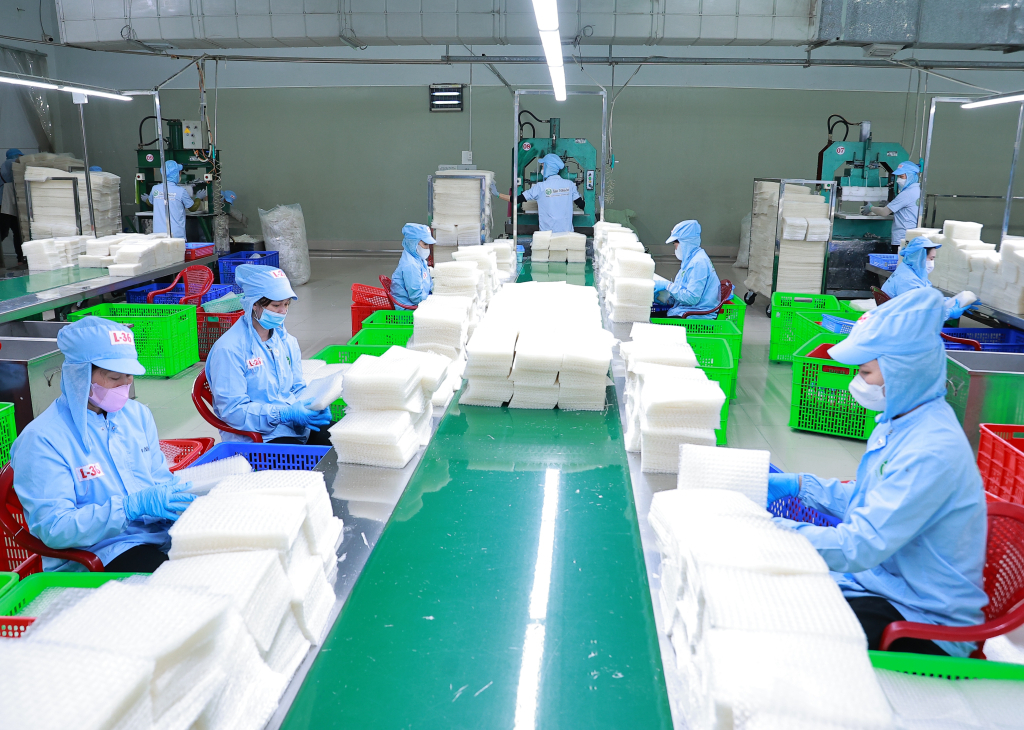
In early 2026, to meet production needs and expand its business scale, Tan Nhien Co., Ltd. (Long Hoa Ward) expanded its production scale while maintaining its existing workforce and recruiting over 100 workers for positions such as worker managers, quality control managers, R&D and electrical technicians, and general laborers. The company prioritizes recruiting local workers and provides vocational training for new employees.
Mr. Nguyen Ngoc Son, Sales Director of Tan Nhien Co., Ltd., stated that in 2026, in addition to training the workforce to improve labor quality, the company aims to embrace transformative trends, especially digital transformation, digitizing all machinery and equipment systems, and updating to more automated equipment.
“Automation is not about reducing labor but about ensuring more consistent, better, and more stable product quality. Because the company's goal for 2026 is to increase production output and export channels, we will need more labor,” Mr. Son said.
Major challenges remain
In reality, businesses have frequent recruitment needs throughout the year, largely due to labor migration, especially in industrial parks and export processing zones. While not an insurmountable problem, securing a workforce that meets the requirements for each position presents considerable challenges at this time.
On the other hand, achieving double-digit growth targets and ensuring a high-quality and efficient labor market is one of the major challenges for the province.
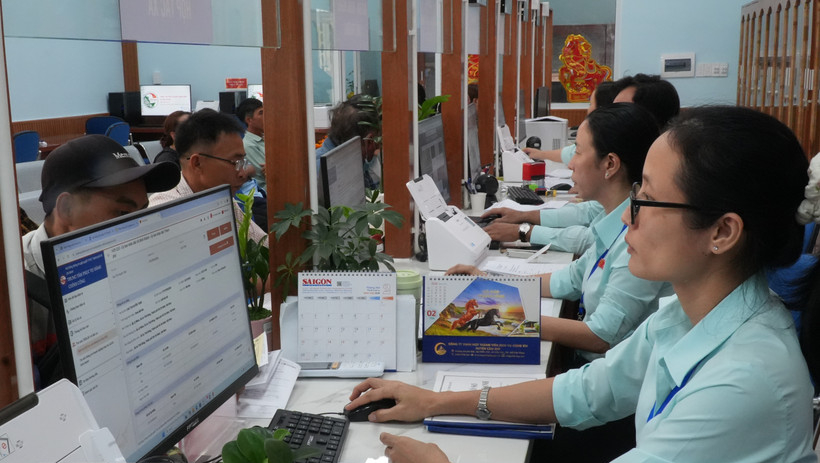
According to the Tay Ninh Job Placement Center, by early 2026, the demand for labor recruitment from domestic businesses will account for nearly 76%, while foreign-invested businesses will make up the remainder, at 24.13%; among these, the demand for unskilled labor is the highest, at 77.49%.
In 2025, to help workers access sustainable employment opportunities, the center provided job counseling and placement services for 2,526 workers. 230 workers were introduced to participate in fixed-term overseas employment programs under contract in countries such as South Korea, Japan, and the Federal Republic of Germany. Simultaneously, unemployment insurance benefits were processed promptly and correctly, ensuring workers' rights and adhering to administrative procedures as stipulated by law.
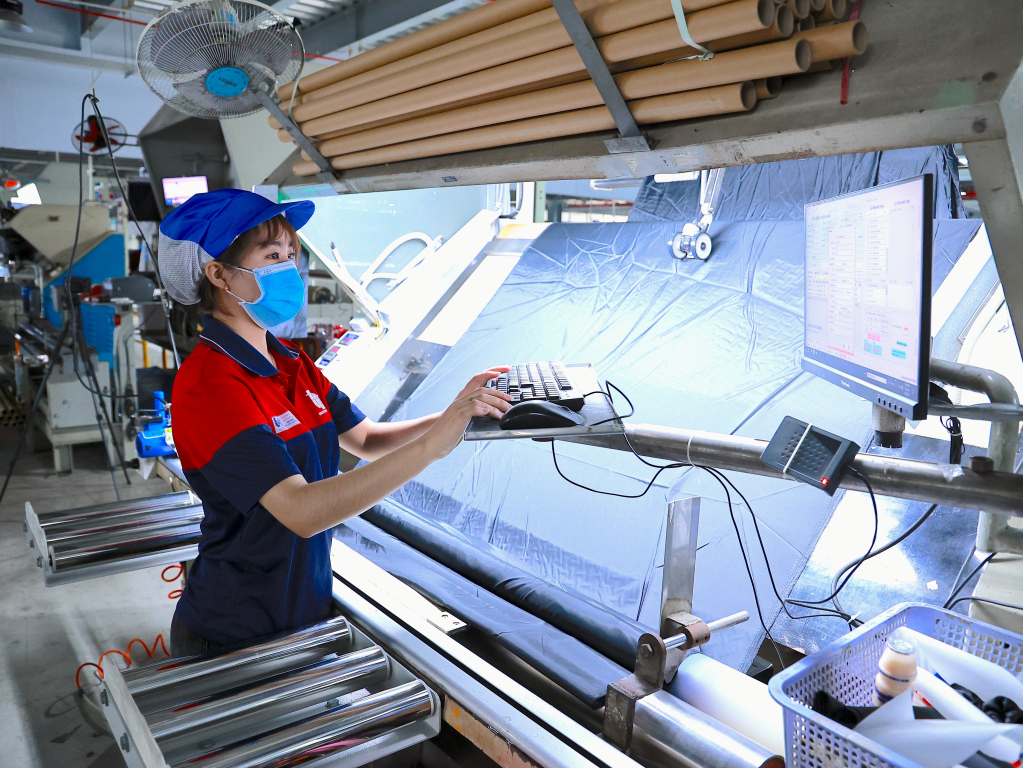
According to statistics from the Department of Internal Affairs, the labor force in 2025 reached over 1.7 million people. 1,673,887 people participated in economic activities, accounting for 51.43% of the population; female workers accounted for approximately 51%, and workers from other provinces accounted for 39%. The province has over 33,500 registered businesses, playing a crucial role in economic development, job creation, and promoting local growth. The total number of workers employed in businesses was 688,467, of which 368,789 were in industrial parks and 319,678 were outside industrial parks.
The province is continuing to effectively implement preferential credit policies, unemployment insurance, and vocational training support to help workers stabilize their jobs, increase their income, and improve their skills. It is coordinating career guidance and counseling for students, demobilized soldiers, and promoting overseas employment opportunities; promoting information technology, updating labor supply and demand data, connecting businesses, and coordinating with neighboring localities to provide job counseling for workers; linking communes and wards in providing job information and monitoring employment status after counseling and referrals.
According to the Department of Internal Affairs' assessment, the province's human resources maintain a reasonable growth rate in quantity and are gradually improving in quality, meeting the requirements of the province's socio-economic development in the current period. Job creation contributes to socio-economic development, maintaining political stability, security, and national defense, and gradually improving the quality of life for workers.
Vocational training support programs, the National Target Program for New Rural Development, the National Target Program for Sustainable Poverty Reduction, and other key projects have contributed to unleashing productive forces and labor, creating a healthy environment for investors to develop production and business, creating many jobs, and contributing to raising awareness throughout society. Workers are becoming increasingly proactive in creating jobs for themselves and others, rather than passively waiting for or relying on state support./.





Ý kiến ()