
Proactive response to drought and salinity during the dry season (Vietnamese)

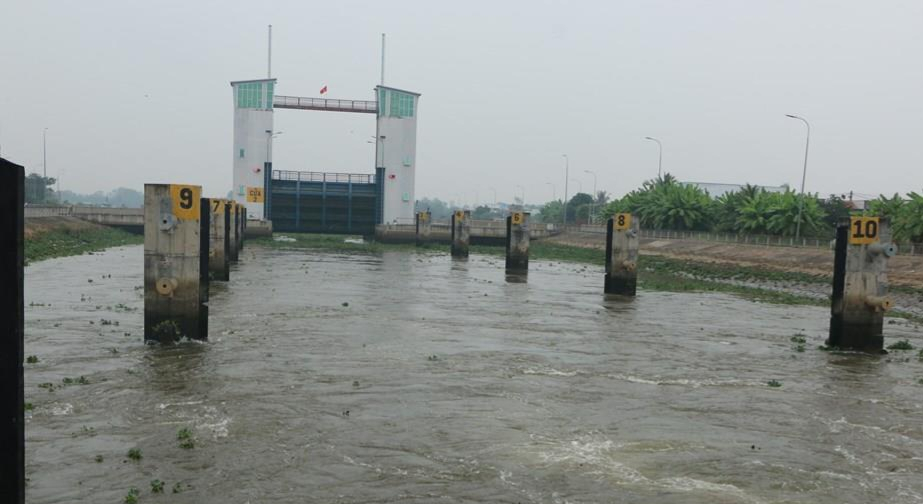
A saltwater intrusion prevention and freshwater storage project is in operation
Accordingly, the Department of Agriculture and Environment, in coordination with localities such as Long An ward, Tan An ward, and the communes of Tan Tru, Vam Co, Nhut Tao, Thu Thua, and Tan Tay, conducted field surveys and developed plans for proactively preventing and responding to drought and saltwater intrusion. The survey results showed that salinity levels in the river and in the inland areas currently range from 0.1–0.5 g/l, remaining within safe limits and basically meeting the needs of production and daily life.
The operation and regulation of key irrigation works on the Vam Co Dong, Vam Co Tay, Nhut Tao rivers and Thu Thua canal are carried out regularly and flexibly. Sluice gates such as Chau Phe, Ong Hong, Thon Thanh, Nhat Tao, Rach Chanh, Rach Dao, Ba Hai Mang, etc., are operated according to schedule to take advantage of water storage when salinity levels are still below 1 g/l.
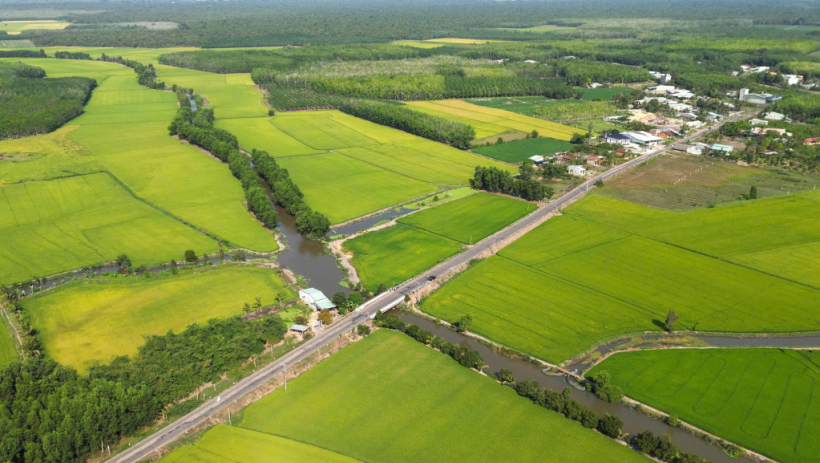
Currently, the total area for the 2025-2026 Winter-Spring crop in Tan Tru, Vam Co, and Nhut Tao communes is approximately 5,455 hectares, mainly consisting of rice plants 40-55 days old. Irrigation water is basically sufficient to meet production needs. However, authorities warn that in the event of prolonged hot weather, increased saltwater intrusion, and insufficient supplementary water, there is a risk of localized water shortages for about 200 hectares of rice in some areas of Vam Co commune.
According to the Irrigation Sub-Department, by March 10, 2026, salinity levels on the Rach Cat, Vam Co Dong, Vam Co Tay, Vam Co, and Tra rivers will range from 0.2–12.6 g/l, lower than the dry seasons of 2025 and 2020. The 1 g/l salinity limit on the Vam Co Dong River will extend beyond the Ben Luc area, approximately 58km from the Soai Rap estuary; on the Vam Co Tay River, it will reach the Song Cui sluice gate in Thuan My commune, approximately 42km from the estuary.
According to forecasts from the Meteorological and Hydrological Service, saltwater intrusion on the two Vam Co rivers (Vam Co Dong and Vam Co Tay) during the 2025-2026 dry season is likely to occur if the total flow from the upper Mekong River to the headwaters of the Mekong Delta is lower than the multi-year average. Water levels at the headwaters will be strongly influenced by tides and will be approximately at the multi-year average, while saltwater intrusion in the Soai Rap estuary will be higher than the multi-year average.
The peak salinity is expected to occur around April 2026, lower than or similar to the same period in 2025 due to unseasonal rains during the dry season. In extreme cases, the delayed arrival of rain combined with the use and exploitation of water resources in the area will prolong drought and salinity intrusion.
To proactively prevent and respond to drought and saltwater intrusion during the 2025-2026 dry season, and to ensure sufficient water supply for production and daily life, the Ministry of Agriculture and Environment requests localities to closely monitor water resource and saltwater intrusion forecasts and warnings from specialized meteorological and hydrological agencies. This is to promptly inform and widely disseminate information to the public about water quality and salinity levels in rivers and inland areas; advise people not to draw water from saline-affected areas; and encourage the economical and efficient use of water, avoiding waste and water pollution.
Forecasting that salinity levels will continue to rise on the Vam Co Dong and Vam Co Tay rivers around the end of March and April 2026, the Department of Agriculture and Environment recommends that localities proactively store water in inland canals and ditches while salinity levels are still within acceptable limits (< 1g/l) to ensure sufficient water supply for agricultural production and daily life.
The Department of Agriculture and Environment has provided a technical guide on drought and salinity control for crops; localities continue to monitor water resources and salinity intrusion and compare them with the guide, especially for crops sensitive to low salinity (< 1g/l); maintain soil moisture by mulching the base of plants during periods of water shortage; regulate key irrigation gates such as Thon Thanh and Nhat Tao gates to store water in inland canals and ditches. The irrigation management and operation units are strengthening coordination with localities to monitor production conditions and plan adjustments to the gate operation schedules accordingly./.



Ý kiến ()